ラベル

ラベル Crafts の投稿を表示しています。 すべての投稿を表示

2013/07/15

Yuki-Tsumugi


Yuki-Tsumugi is the hand weaved silk fabric mainly designed for Kimono. City of Yuki and Oyama,  located 80km away from Tokyo is the main region where Yuki-Tsumugi is produced.  Recently, Yuki-Tsumugi has been named UNESCO's Cultural Heritage of Humanity, and people relating industry are trying to use this oppirtunity to catch people's attention about Yuki-Tsumugi .

All the work is done by hand, from spinning yarn by floss silk to the weaving. It takes a lot of time and efforts to complete one Kimono fabric caused as the result of high price even though Yuki-Tsumugi is not considered as a formal wear, not suitable for ceremonial occasions like a wedding.

Honba Yuki-Tsumugi which is concedered as qualified Yuki-Tsumugi has to pass 15 examinations and use three unique techniques: floss silk spun by hand into threads called Te-Tsumugi, twined threads preventing from dyeing to create pattern called Kasuri-kukuri then ground loom called Jibata for weaveing . Only passing all these examinations and using three techniques are considered as a fomer Yuki-Tsumugi and able to obtain a certification.

■Te-tsumugi
Floss silk spun by hand without twist are used as threads for Yuki-Tsumugi. Twisting gives durability and reinforcement into threads ususlly, but in Yuki-Tsumugi, non-twisting threads spun by hand are used. And that is why Yuki-Tsumugi is light and warm to wear. Also non-twiested threads give one of the unique elements of Yuki-Tsumugi such as distinctive texture with fluffy surface. This surface works good for prevent water, so it's said that Yuki-Tsumugi can be wore under the rain and snow without worrying about absorption. In Yuki-Tsumugi, wrap threads is thicker than weft, almost twice as thick as weft. Since threads are not twisted, in a process of weaving, warp threadsd are easily to cut off. Condition of  these non-twisted thread called "Te-tsumugi threads" can be changed depending on the weather and humidity of the day so it takes some time to get used to handle it. Starch and chemical glew are applied to prevent threads from get fluffy and split up as needed.

■Kasuri-kukuri
Based on the Kimono design, spots where do not want to be dyed are tied up by cotton yarn to prevent permeation during the dyeing process. Depend on the design and number of colors to be used, this process are repeated over and over. And those binding spots end up as much as 80,000 when it comes to create the highest quality of Yuki-Tsumugi.

■Weaving
"Jibata" is the type of loom used in Yuki-Tsumugi. It has backstrap, loops it around the back and adjusts the tention of warp threads on the loom. Yuki-Tsumugi is a plain weave has only upper and lower threads and those are switched by the heddle called "Kakeito-kake". The heddle moves up and down by pulling the string connected from heddle to treadle by a leg. More you stretch warp threads taut by pulling with back and hitting woof threads by shuttle, denser you get on fabric. It's said that density directly resulting in the quality of fabric such as durability and warmth. Yuki-Tsumugi has enough durability to wear three generations and increase its luster while passing down the generation after generation.

2012/09/03

Aizu Mishima Basketry & Showa Ramie  

Dragon woodcarving at Kokuzoson 


■Aizu Mishima Basketry


Mishima Kogei Kan

Mishima district located in Southwest of Fukushima Prefecture in the north part of Japan. Like other Japanese small towns, in Mishima agriculture is the main industry and has been suffer from  depopulation. But these days town gains sparks back again due to the traditional Basketry products getting popular among middle aged women who reconsider and realize how beautiful Japanese traditional craft works are.

山ブドウ手提げ籠  マタタビ笊 ヒロロ手提げバッグ  
From left Yama-budo, Matatabi, Hiroro
The materials of Basketry can be found in the mountains locally.  Most popular materials are called Hiroro, Matatabi and Yama-budo.  Hiroro is long wild sedge grass and it's twisted into a cord and then used as a weaving materials. Matatabi is split into thin strips for their use. Bark a Yama-budo vine and the skin is used as a material of Basketry.

Matatabi baskets are mainly used as kitchen products since this material does not absorb water so readily. Hiroro and Yama-budo are mainly used for weaving handbags and baskets. Yama-budo handbags are the most popular products these days and run out very quickly even though the price are very expensive; for example, 30cm x 40cm x 14cm costs 180,000yen (=1,800USD)! 

To complete one basket is a year work and this whole process from finding materials to selling at the store is usually done by the one person. These process and techniques have been handed down from one generation to the next for hundred years. You can directly buy those products from makers at MishimaTraditional Craft Center where operated by the town of Mishima.

In the beginning of August, I visited Mishima Traditional Craft Center to look for Yama-budo handbags but as a result of Aizu Craft Fair was held in June, most of Basketry products run out and couldn't find much.


■Showa Ramie

Karamushi Kogei Hakubutsukan(Museum of Ramie)


日傘

帯

Karamushi(Ramie)-ori is the weave cloth made by the material called Choma (type of Urtica). Now, Showa village is the only place producing Karamushi in Japan other than Okinawa. To complete Karamushi-ori takes more than 10 steps must work together with particular seasons of the year. It's a lot of work but the during the winter, Showa village is well known for heavy snowfall area needed produce some products that is easy to exchange for cash. So since 600 years ago, the people in Showa developed the Karamushi-ori for their lives.

At the Museum of Ramie and Karamushiori no sato, you will be able to see various Karamushi products and able to buy them.

Lily at Showa 


Karamushi-ori is the part of their lives for the people in Showa village and still try to make better Karamushi weaving products with passions.


Endoji Fukuman Kokuzoson


On a way back to from Showa Village, I stopped by the Yanaizu village where the temple called Enzo-ji Fukuman Kokuzoson. This temple was built almost 1,300 years ago and well known as the god of Tigar and Ox of Oriental Zodiac
OX

TIGAR
View from temple
Temple is located on top of the cliff and has very beautiful view of Tadami River which run through the village. Yanaizu is such a small village has beautiful nature and people, probably one of the best place to know the Japanese country living. 

2012/07/01

Matsumoto Craft Fair / Nagano Matsumoto


Matsumoto craft fair is one of the biggest outdoor craft fair held in Japan every year on the last weekend in May.  This is my first time visiting the fair and Matsumoto city.  


In the early morning of 27th of May,  I took JR Super-Azusa from Shinjyuku-station and headed to Matsumoto.  It took almost 2.5 hours from Shinjyuku-station, but this is the fastest way to get to Matsumoto.  Taking Expressway bus from Shinjyuku-station was alternative option, it's cheaper but takes more time.  I found out later on buying Super-Azusa ticket at ticket outlet shop was much more cheaper than buying ticket at JR station, almost 2,000 yen cheaper.


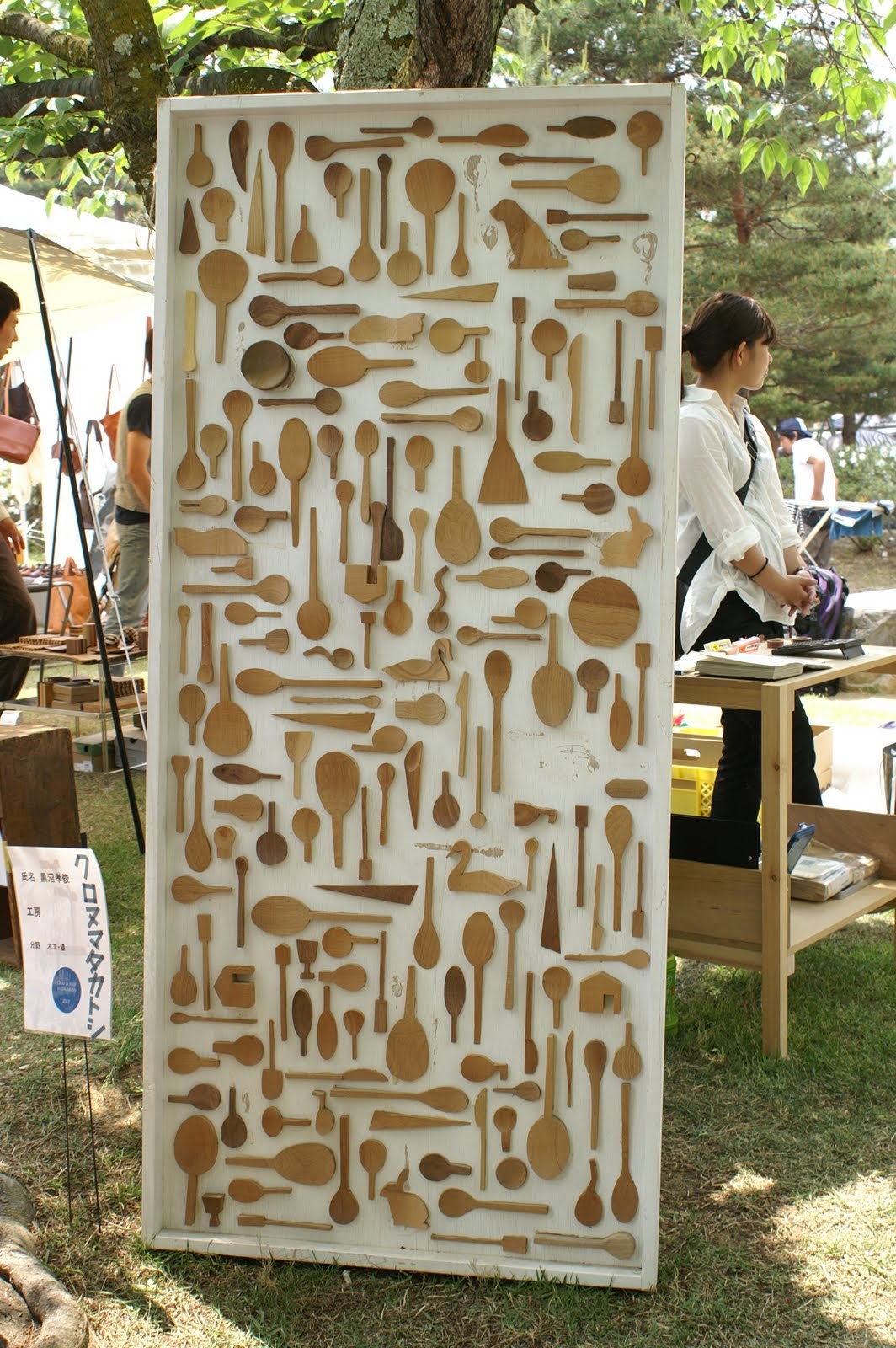
About 280 craftsmen gathered from all over Japan and about 72,000 people enjoyed for this two days fair.  All the booth were full of unique crafts which handmaded by Japanese young crafts artists.  Matsumoto Crafts fair was held at Agatano-Mori Park.  About 20 min from Mataumoto Station by walking, and also for 100-yen there was shuttle bus from Matsumto Station to Agatano-Mori Park every 5 min. To prevent illegal parking and stand in the position of  preventing global warming, this fair strongly suggested use public transportation.


Let's me introduce several craftsmen that I though very interesting.


KOBAYASHI/KATSUHISA (小林克久)
Place: Okayama
Category: Woodwork, Urushi

Wooden bowl roughly hand carved and put Japanese lacquer called Urushi on top. To increase in strength, add Jino-ko (powder of wood coal、stone) in Urushi and coats inside of the bowl. The reflection of light shows different faces in this bowl. 


OOSAKO/YUKI (大迫友紀)


Place: Ishikawa
Category: Glass products

She express sensitiveness through her various type of glass products. Those frosted glasses lead us into the nostalgic memories of our past.  


■SEO/MAKOTO (瀬尾誠)
Place: Nagano
Category: Urushi

I was very impressed by his work that changed my concept of Urushi.  Urushi is generally used for lacquer ware such as dishes and soup bowls. Those lacquer wares are usually coated clean and sharp paint, but Mr. Seo uses Urshi for createing unique shapes and adding depth for his works. He is creating Art by Urushi.


After Matsumoto Craft Fair, I visited Matsumoto Castle. Matsumoto Castle, sometime called 'Crow Castle' is one of four castles designated as National Treasures of Japan, and also the oldest castle  donjon remaining in Japan. It takes about 20min by walking or 10min by bus from Matsumoto station. On the sidewalk, ancient landscape of the town still remain, so I suggest by walking.


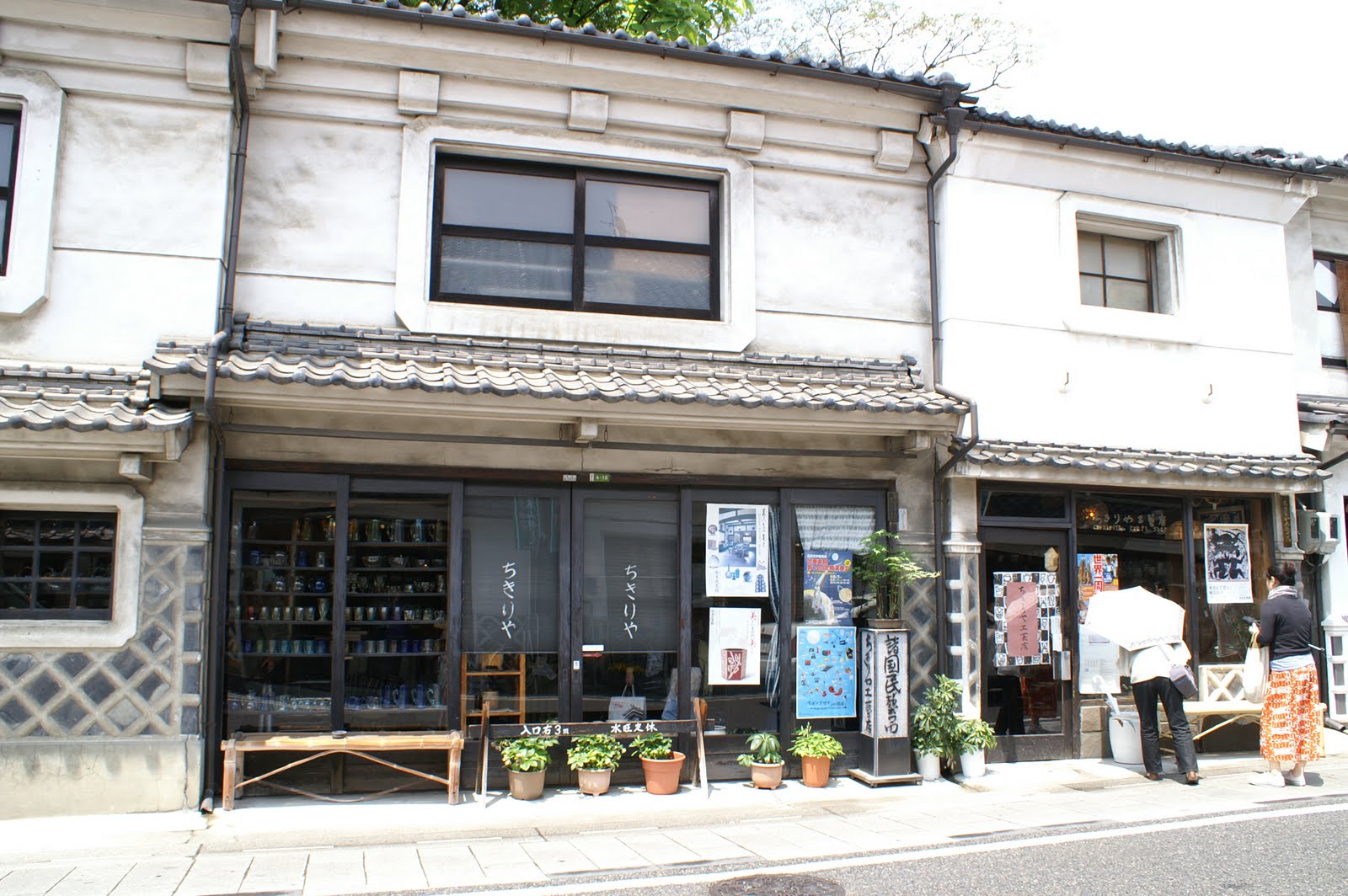
Especially street called ''Nakamachi-Dori' has many galleries which sell different types of Japanese traditional handcrafts such as Urushi, Porcelain, Textile, Woodwork, Glass and so on.